

Prairie Health & Wellness Newsletter — November 2025, Edition 23
Pillar of the Month: Stress
Restore a well balanced nervous system by prioritizing self-care, managing stressors, and owning your stress-response
A Word from Jami Mann, PA
Cognitive Health and Neurodegenerative Disease
Lifespan is how long you live while healthspan is how long you live well. I often remind patients that their health span is just as important as their lifespan, especially when it comes to brain health. Neurodegenerative diseases like dementia and Alzheimer’s don’t happen overnight—rather they develop slowly over the years and often stem from long-term inflammation, blood sugar problems, poor sleep, chronic stress, and nutrient deficiencies.
Genetics can also play a role with Alzheimer’s specifically. At Prairie Health, we can test your APOE gene, which influences how your body handles cholesterol and repairs the brain. There are different types of APOE alleles: APOE2, APOE3, and APOE4. Carrying APOE4—especially two copies—increases the risk of Alzheimer’s, but it doesn’t mean you will get the disease, just that your prevention strategy should be more aggressive.
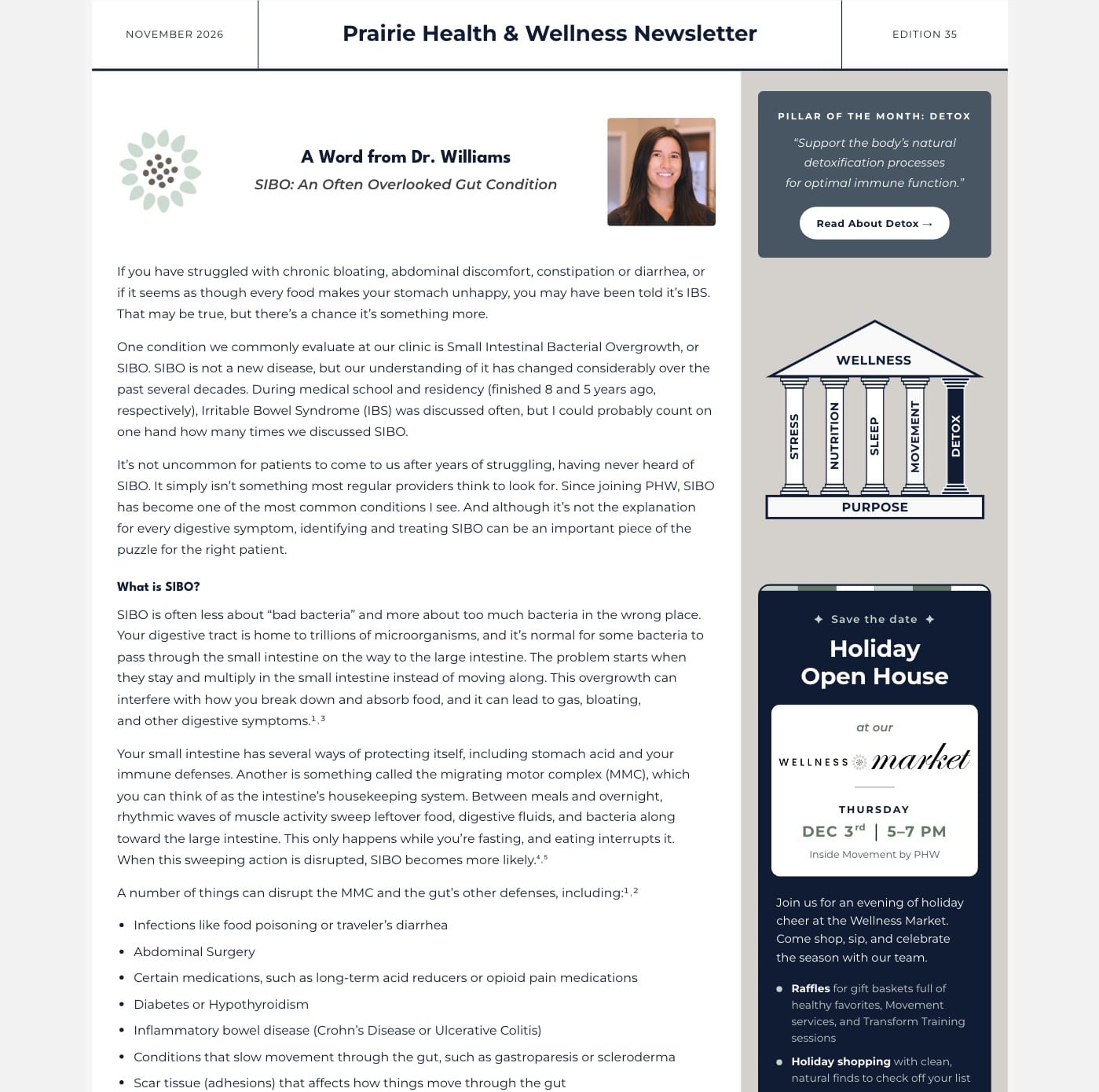
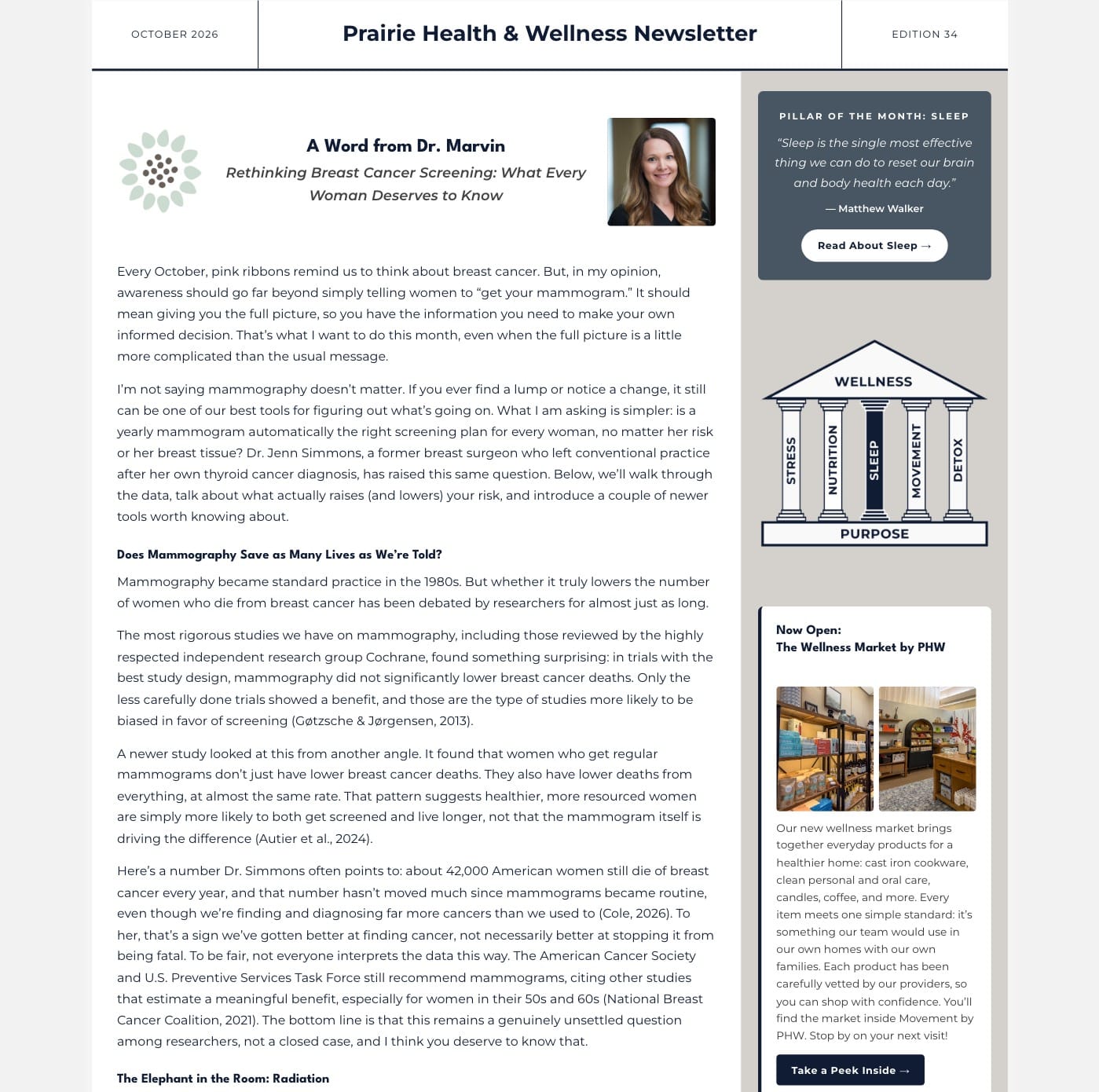
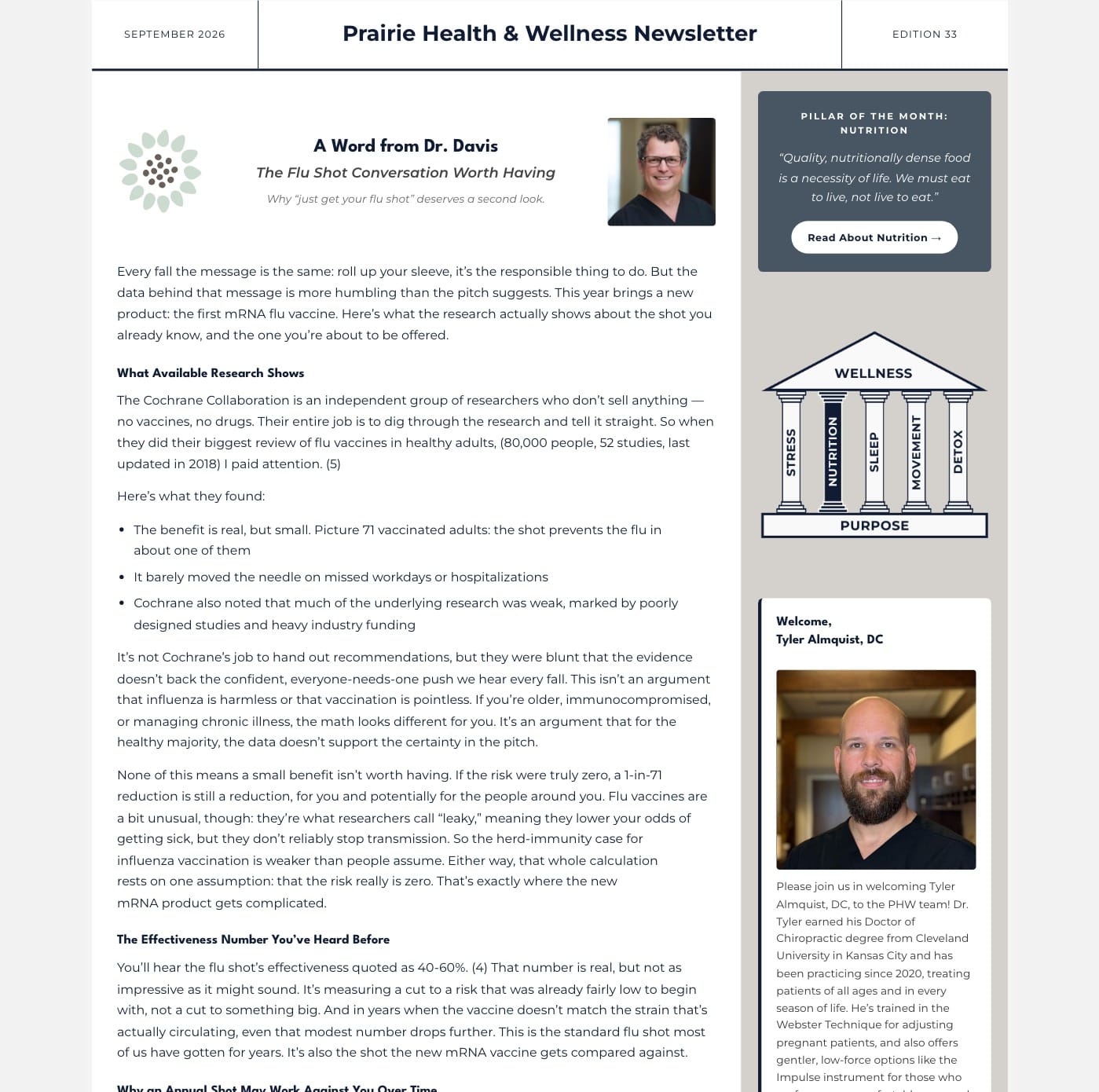
Prevention Strategies within the 5 Pillars of Health:
- Sleep: Even short-term sleep deprivation can increase inflammation, impair brain waste clearance, and raise Alzheimer’s-related proteins like amyloid-beta. It is during deep sleep that the brain’s glymphatic system, a specialized waste clearance system, becomes highly active and works to flush out harmful proteins and toxins. Without enough quality sleep, this drainage slows down, leading to buildup that can contribute to brain fog and cognitive issues. A recent study (1) found that individuals with poor sleep characteristics, like insomnia or early waking, showed more signs of brain atrophy (shrinking), suggesting their brains had aged faster.
- Nutrition: Studies (2) show that people with multiple metabolic issues, often called “metabolic syndrome”, are three to four times more likely to develop memory problems or cognitive dysfunction later in life. With routine lab work, we can identify insulin resistance, which is often the first sign of metabolic issues. From there, we can implement nutritional strategies to reduce insulin resistance and track progress. Many foods can also be inflammatory for some patients and may need to be reduced or eliminated to bring down overall inflammation in the brain and body.
- Movement: Although often overlooked, daily movement may be the most important lifestyle change you can make to protect brain health as studies have shown that inactivity increases dementia risk by about 40% (4). Exercise boosts key brain-supporting factors like BDNF, or Brain-Derived Neurotrophic Factor, which promotes neuroplasticity by helping the brain form new connections, protecting brain cells from damage, and supporting the creation of new brain cells. Exercise also significantly reduces insulin resistance. Both aerobic activities and resistance training support brain function, but resistance training may be particularly beneficial for those with mild cognitive issues as it requires more focus and coordination. For the greatest brain and body benefits, the best strategy is to combine different types of exercise—including cardio, strength training, and mentally engaging activities such as tennis or dancing.
- Stress: Chronic stress can have harmful effects on the brain over time. Stress causes a raise in hormones like cortisol and excitatory neurotransmitters like glutamate, which can damage brain cells. Stress also triggers inflammation and reduces the brain’s ability to grow new cells, especially in areas responsible for memory and decision-making like the hippocampus and prefrontal cortex. These changes can shrink brain structures, weaken connections between neurons, and possibly lead to the buildup of abnormal proteins linked to diseases like Alzheimer’s. As a result, people under chronic stress often experience problems with memory, attention, and thinking. A major study published in JAMA Neurology (5) found that individuals with stress-related disorders like PTSD had a significantly higher risk of developing neurodegenerative diseases. This highlights how long-term stress can contribute to mental health issues as well as lasting cognitive decline and brain disease.
- Detox: When the body’s natural ability to detoxify is reduced, harmful substances can build up and damage the brain. Organs like the liver and kidneys, along with antioxidants, help clear out waste products and toxins from things like pollution, pesticides, heavy metals, and even normal metabolism. If these systems are overwhelmed or not working properly, toxins can accumulate and reach the brain. A 2019 scientific review (3) explains how exposure to heavy metals like lead, aluminum, and copper can increase oxidative stress and inflammation in the brain, promoting the accumulation of harmful proteins. Another consequence of poor detox is mitochondrial dysfunction. Mitochondria are the “powerhouses” of cells. If they’re damaged, neurons lose energy and may begin to die, which is a hallmark of cognitive decline and neurodegeneration.
Vital Nutrients for Brain Health:
- Omega MD: Omega-3 Fatty Acids (DHA & EPA) help build and protect brain cell membranes, reduce inflammation, and support communication between brain cells. They’ve been linked to better memory, mood, and reduced risk of cognitive decline. At PHW, we feel so strongly about healthy omega levels that we include this blood panel in our annual member labs!
- Creatine MD: Creatine acts as an energy reserve for brain cells, especially during times of stress like sleep deprivation or demanding cognitive tasks. It has been shown to reduce inflammation and supports mental clarity, memory, and mental energy—particularly helpful in aging or sleep-deprived brains.
- Methylated B Vitamins: Nutrients like vitamin B12, B6, and folate are used by the body to convert something called homocysteine into other useful substances. Homocysteine can build up in the body if you don’t have enough of these B vitamins or if your body can’t process them properly due to genetics or other reasons. High homocysteine levels may directly contribute to brain atrophy and cognitive decline as well as impair nitric oxide production, negatively affecting blood vessel health.
- BrainMag MD: Magnesium Threonate is a form of magnesium that crosses the blood-brain barrier effectively, which not all forms of magnesium are able to do. It has been shown to enhance brain cell communication, improve learning and memory, and may help slow age-related cognitive decline. Magnesium can also have a calming effect, improving sleep and decreasing anxiety.
*Always discuss any supplement changes or additions with your healthcare provider to make sure they are safe and appropriate for you.
While genetics can influence your risk for neurodegenerative disease, your daily choices have an even greater impact on how your brain ages. Protecting your healthspan means supporting your brain’s ability to function, repair, and adapt for years to come. By focusing on the 5 Pillars of Health—sleep, nutrition, movement, stress management, and detoxification—you can significantly lower inflammation, improve metabolic health, and strengthen cognitive resilience. At Prairie Health & Wellness, our goal is to help you take proactive steps to preserve both your lifespan and your healthspan—so you can think clearly, move freely, and live well at every stage of life.
Red Light Therapy
JOOVV Red Light and Near Infrared Therapy is an evidence-based treatment helpful for enhanced cellular health and mitochondrial function, reduced inflammation and pain, faster recovery times from illness or injury, increased blood flow, improved sleep, and improved skin health. Each simple session lasts 10 minutes on both the front and back (20 minutes total), with no restrictions on frequency.
Supplement Highlight: Creatine MD
Creatine MD is designed to support muscle growth and strength, brain and cognitive function, and athletic performance and supports retention of lean body mass at any age and healthy aging. Studies show that creatine may benefit brain health by providing energy to brain cells, particularly during demanding cognitive tasks or states of stress like sleep deprivation. Research indicates potential improvements in areas like short-term memory, reasoning, and a reduction in mental fatigue. Preliminary studies have also suggested positive effects for conditions like Alzheimer's and recovery from traumatic brain injury.
Cindy Moore, LMT
Welcome to PHW!
I’m Cindy Moore—a Wichita native, Licensed Massage Therapist, and 200-hour Registered Yoga Instructor. With 20 years of patient care experience, I believe in holistic healing through massage and gentle yoga. Using a trauma-sensitive approach, I help the body release tension, move with ease, and find deep rest. I’m grateful to be part of a community dedicated to supporting each patient’s healing journey. I look forward to serving you!
Check out our Brain Boost Cookbook!
PRAIRIEHEALTHWELLNESS.COM