
Prairie Health & Wellness Newsletter
Pillar of the Month
Nutrition
Quality, nutritionally dense food is a necessity of life. We must eat to live, not live to eat.
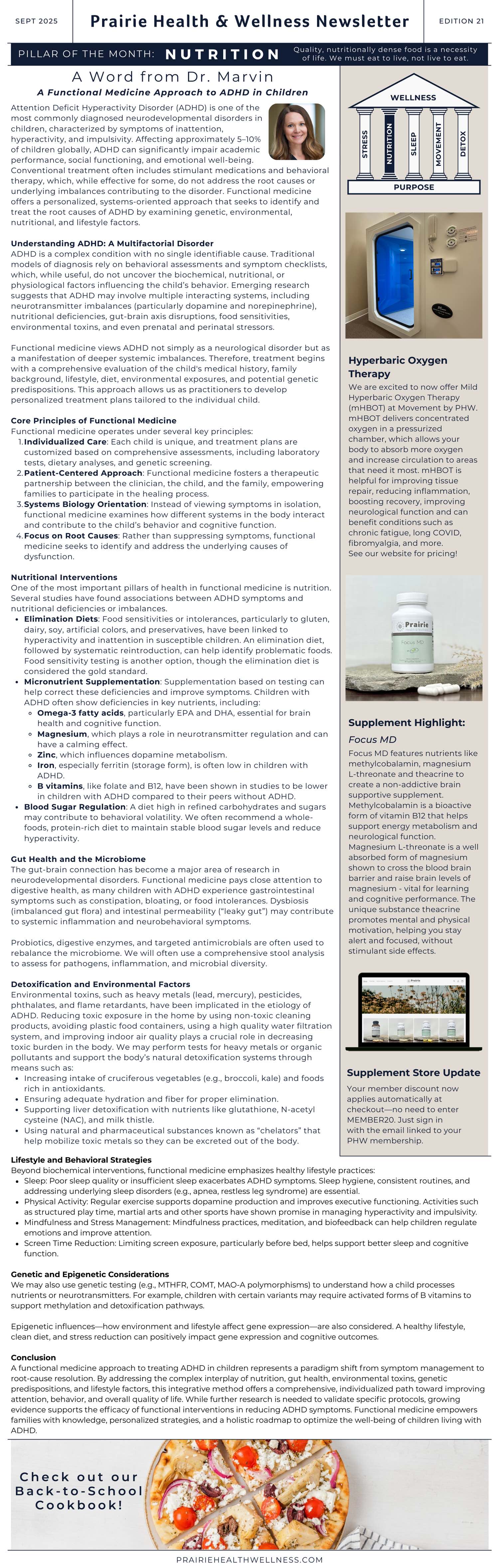
A Word from Dr. Marvin
A Functional Medicine Approach to ADHD in Children
Attention Deficit Hyperactivity Disorder (ADHD) is one of the most commonly diagnosed neurodevelopmental disorders in children, affecting approximately 5–10% of children globally. Conventional treatment often includes stimulant medications and behavioral therapy, which do not address the root causes. Functional medicine offers a personalized, systems-oriented approach that seeks to identify and treat the root causes.
Understanding ADHD: A Multifactorial Disorder
Emerging research suggests that ADHD may involve multiple interacting systems: neurotransmitter imbalances, nutritional deficiencies, gut-brain axis disruptions, food sensitivities, environmental toxins, and prenatal stressors. Functional medicine views ADHD as a manifestation of deeper systemic imbalances.
Nutritional Interventions
- Elimination Diets: Food sensitivities to gluten, dairy, soy, artificial colors, and preservatives have been linked to hyperactivity and inattention in susceptible children.
- Micronutrient Supplementation: Children with ADHD often show deficiencies in Omega-3 fatty acids, Magnesium, Zinc, Iron (ferritin), and B vitamins.
- Blood Sugar Regulation: A diet high in refined carbohydrates may contribute to behavioral volatility. We recommend a whole-foods, protein-rich diet.
Gut Health and the Microbiome
The gut-brain connection is a major area of research. Many children with ADHD experience gastrointestinal symptoms. Dysbiosis and intestinal permeability (“leaky gut”) may contribute to systemic inflammation and neurobehavioral symptoms.
Detoxification and Environmental Factors
Environmental toxins such as heavy metals, pesticides, and phthalates have been implicated in ADHD. Reducing toxic exposure and supporting the body’s natural detoxification systems through cruciferous vegetables, hydration, and supplements like glutathione, NAC, and milk thistle is crucial.
Lifestyle and Behavioral Strategies
- Sleep: Poor sleep exacerbates ADHD symptoms. Address underlying sleep disorders.
- Physical Activity: Exercise supports dopamine production and improves executive functioning.
- Mindfulness: Meditation and biofeedback can help children regulate emotions.
- Screen Time Reduction: Limiting screen exposure supports better sleep and cognitive function.
Genetic and Epigenetic Considerations
We may use genetic testing (MTHFR, COMT, MAO-A polymorphisms) to understand how a child processes nutrients or neurotransmitters. A healthy lifestyle can positively impact gene expression and cognitive outcomes.
Functional medicine empowers families with knowledge, personalized strategies, and a holistic roadmap to optimize the well-being of children living with ADHD.
🫁 Hyperbaric Oxygen Therapy
We are excited to now offer Mild Hyperbaric Oxygen Therapy (mHBOT) at Movement by PHW. mHBOT delivers concentrated oxygen in a pressurized chamber, helpful for improving tissue repair, reducing inflammation, boosting recovery, and improving neurological function.
💊 Supplement Highlight: Focus MD
Focus MD features methylcobalamin, magnesium L-threonate and theacrine to create a non-addictive brain supportive supplement. Methylcobalamin supports energy metabolism and neurological function. Magnesium L-threonate crosses the blood-brain barrier to support learning and cognitive performance. Theacrine promotes mental and physical motivation without stimulant side effects.
📌 Featured Resources
- Nutrition Pillar
- Membership Details
- Online Supplement Store
- Hyperbaric Oxygen Therapy
- Podcast: Helping Children Thrive - Holistically Supporting Your child with ADHD with Dr Elisa Song
- Podcast: Revolution Health Radio - The Functional Medicine Approach to ADHD, with Dr Jim Greenblatt
- Book: Finally Focused by James Greenblatt, M.D. & Bill Gottlieb, CHC
- PHW Cookbook: Back-to-School Recipes
📚 Research & References
- Borre, Y. E., O’Keeffe, G. W., Clarke, G., Stanton, C., Dinan, T. G., & Cryan, J. F. (2014). Microbiota and neurodevelopmental windows: Implications for brain disorders.Trends in Molecular Medicine, 20(9), 509–518.
- Rossi, M., Amaretti, A., & Raimondi, S. (2016). Folate and folic acid in the treatment of children with ADHD and related conditions.Frontiers in Neuroscience, 10,132.
- Sinn, N., & Bryan, J. (2007). Effect of supplementation with polyunsaturated fatty acids and micronutrients on learning and behavior problems associated with ADHD.Journal of Developmental and Behavioral Pediatrics, 28(2), 82–91.
- Stevens, L. J., Kuczek, T., Burgess, J. R., Hurt, E., & Arnold, L. E. (2011). Dietary sensitivities and ADHD symptoms: A review.Clinical Pediatrics, 50(4), 279–293.
Want to receive our newsletter? Become a PHW member for monthly health insights delivered to your inbox.