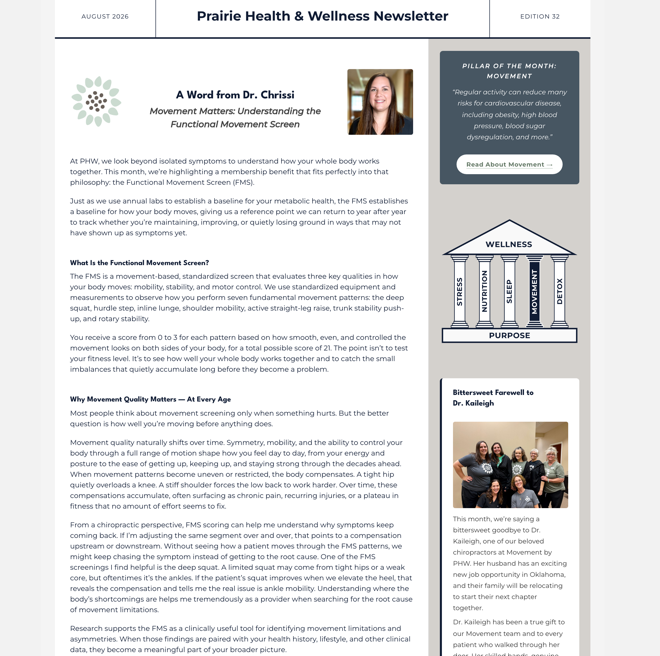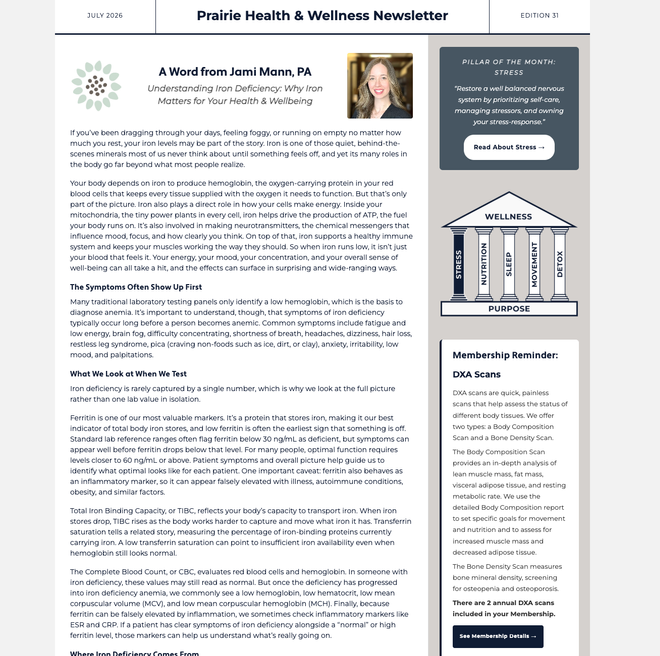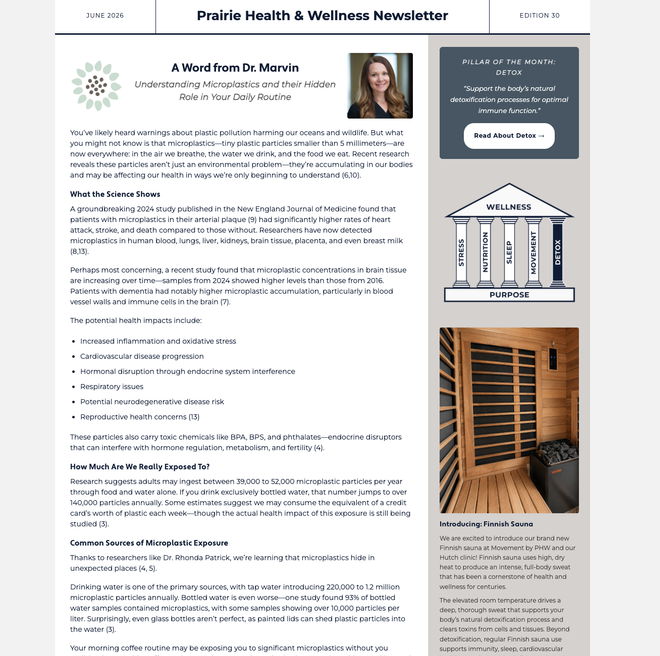

Prairie Health & Wellness Newsletter
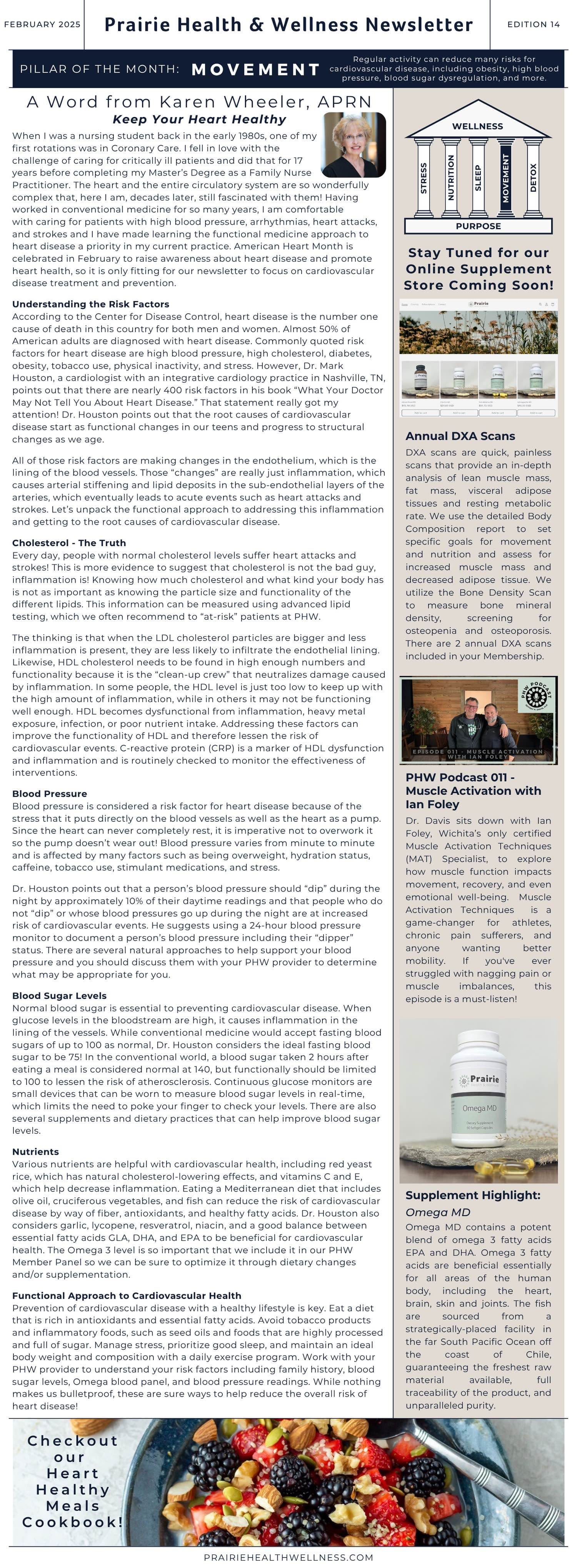
Pillar of the Month
Movement
Regular activity can reduce many risks for cardiovascular disease, including obesity, high blood pressure, blood sugar dysregulation, and more.
A Word from Karen Wheeler, APRN
Keep Your Heart Healthy
When I was a nursing student back in the early 1980s, one of my first rotations was in Coronary Care. I fell in love with the challenge of caring for critically ill patients and did that for 17 years before completing my Master’s Degree as a Family Nurse Practitioner. The heart and the entire circulatory system are so wonderfully complex that, here I am, decades later, still fascinated with them! American Heart Month is celebrated in February to raise awareness about heart disease and promote heart health.
Understanding the Risk Factors
According to the Center for Disease Control, heart disease is the number one cause of death in this country for both men and women. Almost 50% of American adults are diagnosed with heart disease. Dr. Mark Houston, a cardiologist with an integrative cardiology practice in Nashville, TN, points out that there are nearly 400 risk factors in his book “What Your Doctor May Not Tell You About Heart Disease.” The root causes of cardiovascular disease start as functional changes in our teens and progress to structural changes as we age.
All of those risk factors are making changes in the endothelium, which is the lining of the blood vessels. Those “changes” are really just inflammation, which causes arterial stiffening and lipid deposits in the sub-endothelial layers of the arteries, which eventually leads to heart attacks and strokes.
Cholesterol – The Truth
Every day, people with normal cholesterol levels suffer heart attacks and strokes! This is more evidence to suggest that cholesterol is not the bad guy, inflammation is! Knowing the particle size and functionality of the different lipids is more important than total numbers. This information can be measured using advanced lipid testing.
HDL cholesterol is the “clean-up crew” that neutralizes damage caused by inflammation. HDL becomes dysfunctional from inflammation, heavy metal exposure, infection, or poor nutrient intake. C-reactive protein (CRP) is a marker of HDL dysfunction and inflammation.
Blood Pressure
Blood pressure is considered a risk factor because of the stress it puts directly on blood vessels and the heart. Dr. Houston points out that a person’s blood pressure should “dip” during the night by approximately 10% and that people who do not “dip” are at increased risk of cardiovascular events. He suggests using a 24-hour blood pressure monitor.
Blood Sugar Levels
Normal blood sugar is essential to preventing cardiovascular disease. While conventional medicine accepts fasting blood sugars up to 100 as normal, Dr. Houston considers the ideal fasting blood sugar to be 75! Continuous glucose monitors are small devices that can measure blood sugar levels in real-time.
Nutrients
Various nutrients are helpful with cardiovascular health, including red yeast rice, vitamins C and E, and a Mediterranean diet with olive oil, cruciferous vegetables, and fish. Dr. Houston also considers garlic, lycopene, resveratrol, niacin, and a good balance between essential fatty acids GLA, DHA, and EPA to be beneficial.
Functional Approach to Cardiovascular Health
Prevention of cardiovascular disease with a healthy lifestyle is key. Eat a diet rich in antioxidants and essential fatty acids. Avoid tobacco products and inflammatory foods. Manage stress, prioritize good sleep, and maintain an ideal body weight and composition. Work with your PHW provider to understand your risk factors. While nothing makes us bulletproof, these are sure ways to help reduce the overall risk of heart disease!
🎙️ PHW Podcast 011 – Muscle Activation with Ian Foley
Dr. Davis sits down with Ian Foley, Wichita’s only certified Muscle Activation Techniques (MAT) Specialist, to explore how muscle function impacts movement, recovery, and even emotional well-being.
📋 Annual DXA Scans
DXA scans are quick, painless scans that provide an in-depth analysis of lean muscle mass, fat mass, visceral adipose tissue, and resting metabolic rate. There are 2 annual DXA scans included in your Membership.
💊 Supplement Highlight: Omega MD
Omega MD contains a potent blend of omega 3 fatty acids EPA and DHA. Omega 3 fatty acids are beneficial essentially for all areas of the human body, including the heart, brain, skin and joints. The fish are sourced from a strategically-placed facility in the far South Pacific Ocean off the coast of Chile, guaranteeing the freshest raw material available, full traceability of the product, and unparalleled purity.
📌 Featured Resources
- Movement Pillar
- Membership Details
- PHW Podcast 011 - Muscle Activation with Ian Foley
- Muscle Activation Techniques (MAT)
- Book - What Your Doctor May Not Tell You About Heart Disease by Mark Houston, MD
- Book - What your Doctor May Not Tell You About Hypertension by Mark Houston, MD
- Podcast - Peter Attia: Understanding Cardiovascular Disease Risk, Cholesterol, and apoB
- Heart Healthy Meals Cookbook
Want to receive our newsletter? Become a PHW member for monthly health insights delivered to your inbox.